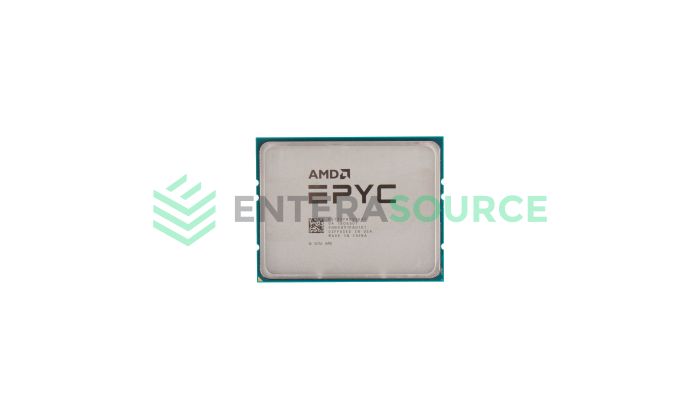

AMD EPYC 7551P 32-Core / 64-Thread SP3 Processor (Dell-Locked): The P Suffix Means Single Socket Only
Enterasource is proud to present the AMD EPYC 7551P, a 32-core, 64-thread Naples-generation server processor on AMD's SP3 platform. The letter at the end of the model number is the single most important fitment fact about this part, and it is the one most often overlooked.
P Means 1P — and the Chip Will Physically Fit a 2P Board Anyway
AMD documents the socket count for this processor as 1P only. The P suffix denotes a single-socket part: it has no inter-socket coherent links enabled, so it cannot be paired.
The reason this matters more than a normal specification is mechanical. An SP3 processor is an SP3 processor — this chip will seat physically in a dual-socket Naples board and leave the second socket permanently unusable. Nothing about the installation will look wrong. If you are buying for a two-socket machine, this is the wrong part, and the machine will not tell you so.
| Specification | EPYC 7551P |
|---|---|
| Cores / threads | 32 / 64 |
| Base clock | 2.0 GHz |
| Maximum boost | 3.0 GHz |
| L3 cache | 64 MB |
| TDP | 180 W |
| Socket count | 1P only |
| Platform | SP3 |
What a Single-Socket 32-Core Part Is Actually For
The 1P EPYC parts were AMD's argument that a single socket could replace a dual-socket Intel machine of the era: 32 cores, 128 lanes of PCIe 3.0 and eight DDR4 memory channels at up to 2666 MT/s giving 170.6 GB/s per socket — all from one processor, with no second socket to license software against.
That is still the case for this part. Where software is licensed per socket, a 32-core 1P machine is a materially cheaper proposition than a two-socket machine of the same core count, and the full 128 PCIe lanes mean a single-socket board can carry a large NVMe and accelerator complement without a switch.
PCIe 3.0, Not 4.0 — This Is the Naples Generation
The 7551P is a first-generation EPYC part and provides PCIe 3.0. PCIe 4.0 arrived with the second-generation Rome parts on the same SP3 socket. If your build depends on Gen4 devices running at Gen4 rates, this processor will run them at Gen3.
Because SP3 carried three EPYC generations, socket compatibility does not imply firmware compatibility — a board's BIOS has to support the specific generation. AMD's dataset says nothing about firmware requirements, so we are not going to publish a rule about it; check your board vendor's processor support list.
No Configurable TDP Published
Unlike some later EPYC processors, AMD publishes no configurable TDP range for this part. One hundred and eighty watts is the only power figure that can be stated, and it is the figure to size a thermal solution against.
The Dell-Locked Disclosure
This unit is Dell-locked. That is our own inventory disclosure and not an AMD specification — AMD publishes nothing about OEM processor fusing, so we state it in our own voice rather than dressing it as a sourced fact.
What it means practically is that a processor fused to one server vendor's platform is generally not usable in another vendor's board. We will not assert a rule we cannot cite; we will tell you plainly that this is a vendor-locked part, because discovering it during commissioning is worse for everyone. If your target platform is not Dell, ask before ordering.
AMD publishes both a tray and a boxed ordering part number for this processor; the unit we hold matches the tray OPN, with our own vendor suffix appended.
Important Notice: the AMD EPYC 7551P is a single-socket server processor for the SP3 platform. This unit is vendor-locked as disclosed above. Heatsinks and carriers are not included. Every unit is tested before it ships and is covered by the Enterasource warranty shown on this page.