Solid State Drives (SSDs)
Enterasource stocks enterprise server SSDs in SAS, SATA, and NVMe interfaces across read-intensive, mixed-use, and write-intensive endurance classes. All SSDs are tested, hot-swap compatible with Dell PowerEdge and HPE ProLiant servers, and backed by warranty.
Filter by interface, form factor, capacity, and endurance class below.
-
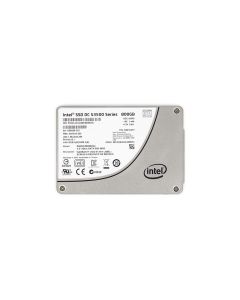
 Intel SSDSC2BB016T4 DC S3500 1.6TB SATA SSD 2.5" 6Gbps Solid State DriveAvailability: Available by QuoteManufacturer: Intel Condition: Refurbished 1 Year WarrantyRequest PricingOut of stock
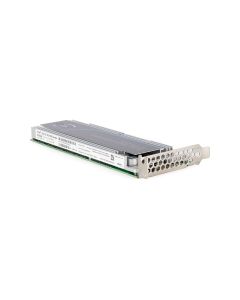
 - Intel SSDPEDMD800G4 DC P3700 800GB NVMe PCI-E Solid State DriveAvailability: Available by QuoteManufacturer: Intel Condition: Refurbished 1 Year WarrantyRequest PricingOut of stock
- Intel SSDSC2BB800G4 DC S3500 800GB SATA SSD 2.5" 6Gbps Solid State DriveAvailability: Available by QuoteManufacturer: Intel Condition: Refurbished 1 Year WarrantyRequest PricingOut of stock
- Intel D3-S4510 240GB SATA SSD 2.5" 6Gbps Solid State Drive | SSDSC2KB240G801Availability: Available by QuoteManufacturer: Intel Condition: Refurbished 1 Year WarrantyRequest PricingOut of stock
- Intel SSDSC2BB012T6 DC S3510 1.2TB SATA SSD 2.5" 6Gbps Solid State DriveAvailability: Available by QuoteManufacturer: Intel Condition: Refurbished 1 Year WarrantyRequest PricingOut of stock
- Intel SSDSC2KB019T7 DC S4500 1.92TB SATA SSD 2.5" 6Gbps Solid State DriveAvailability: Available by QuoteManufacturer: Intel Condition: Refurbished 1 Year WarrantyRequest PricingOut of stock
- Intel SSDSC2BA800G3 DC S3700 800GB MLC SATA SSD 2.5" 6Gbps Solid State DriveAvailability: Available by QuoteManufacturer: Intel Condition: Refurbished 1 Year WarrantyRequest PricingOut of stock
- Intel SSDSC2BA800G3E S3700 800GB MLC SATA 2.5" 6Gb MU Solid State Drive | 4WN3GAvailability: Available by QuoteManufacturer: Intel Condition: Refurbished 1 Year WarrantyRequest PricingOut of stock
- Intel SSDSC2BA012T4 DC S3710 1.2TB MLC SATA SSD 2.5" 6Gbps WI Solid State DriveAvailability: Available by QuoteManufacturer: Intel Condition: Refurbished 1 Year WarrantyRequest PricingOut of stock
- Intel SSDSCKKB240G8 D3-S4510 240GB TLC SATA SSD 6Gbps M.2 Solid State DriveAvailability: Available by QuoteManufacturer: Intel Condition: Refurbished 1 Year WarrantyRequest PricingOut of stock
- Intel SSDSC2BB240G7 DC S3520 240GB SATA SSD 2.5" 6Gbps Solid State DriveAvailability: Available by QuoteManufacturer: Intel Condition: Refurbished 1 Year WarrantyRequest PricingOut of stock
- Intel SSDPED1D280GA Optane 900P 280GB PCIe NVMe Solid State DriveAvailability: Available by QuoteManufacturer: Intel Condition: Refurbished 1 Year WarrantyRequest PricingOut of stock




SAS vs SATA vs NVMe Server SSDs
NVMe SSDs connect over PCIe for the lowest latency and highest throughput. Enterprise NVMe Gen 4 SSDs list sequential reads of up to 7,400 MB/s, more than three times a dual-port 12 Gb/s SAS SSD from the same maker. Used for database storage, caching tiers, and latency-sensitive applications. Requires NVMe-capable drive bays or universal slots.
SAS SSDs provide dual-port connectivity for failover. They connect at 12 Gb/s, or at 22.5 Gb/s as 24G SAS when both the drive and the controller support it. Compatible with SAS-capable drive bays and SAS-capable Dell PERC and HPE Smart Array controllers.
SATA SSDs are the lowest-cost SSD option at 6 Gb/s. Single-port only. Suitable for boot drives, read-heavy workloads, and cost-sensitive deployments where SAS dual-port redundancy is not required.
Read-Intensive vs Mixed-Use vs Write-Intensive
Enterprise SSDs are rated by endurance class — the number of drive writes per day (DWPD) the drive is warranted for:
- Read-Intensive (RI) — Less than 1 DWPD. Lowest cost per GB. For read-heavy workloads: web serving, media streaming, boot drives, read replicas.
- Mixed-Use (MU) — 1-3 DWPD. Balanced read/write. For virtual machine datastores, general database, email servers.
- Write-Intensive (WI) — 3-10+ DWPD. Highest endurance. For write-heavy databases, OLTP, logging, caching tiers.
Choosing the right endurance class affects both cost and drive lifespan. Over-specifying wastes budget; under-specifying risks premature wear.
How to Choose the Right Server SSD
- Check your server's interface support — NVMe requires NVMe-capable bays; SAS requires SAS-capable bays; SATA works in SAS or SATA bays
- Match endurance to workload — RI for reads, MU for balanced, WI for writes
- Select form factor — 2.5-inch (standard) or E3.S (NVMe, on select 16th and 17th Gen PowerEdge servers, such as the R660, R760 and R770)
- Contact Enterasource for volume pricing on multi-drive configurations
Frequently Asked Questions
- What is the difference between read-intensive, mixed-use, and write-intensive SSDs?
- Enterprise SSDs are rated by DWPD (drive writes per day) — the amount of write endurance warranted over the drive's service life. Read-intensive drives (under 1 DWPD) cost the least per gigabyte and are designed for workloads that are 90%+ reads, such as web serving, media delivery, and database read replicas. Mixed-use drives (1-3 DWPD) handle balanced read/write patterns for VM datastores and general databases. Write-intensive drives (3-10+ DWPD) withstand the heaviest write loads for OLTP, transaction logging, and caching tiers. Selecting the correct endurance class optimizes both cost and drive lifespan.
- NVMe vs SAS SSD: which is better for my server?
- NVMe SSDs connect over PCIe; enterprise Gen 4 models list sequential reads of up to 7,400 MB/s and, on Seagate's datasheets, lower average read latency than 12 Gb/s SAS SSDs. NVMe is the best choice for latency-sensitive databases, caching, and any workload that saturates SAS bandwidth. SAS SSDs provide dual-port redundancy and are managed by SAS-capable hardware RAID controllers (Dell PERC, HPE Smart Array). If your server has NVMe-capable bays and your workload benefits from maximum throughput, choose NVMe. If your server has SAS bays and a SAS-capable controller, choose SAS SSDs; SATA SSDs also work in SAS bays. For hardware RAID on NVMe, choose an NVMe RAID controller such as the Dell PERC H755N.
- What SSD endurance class do I need for virtualization?
- For most VMware vSphere and Hyper-V virtualization workloads, mixed-use (MU) SSDs rated at 1-3 DWPD are the standard. VM datastore I/O patterns are typically a 60/40 to 70/30 read/write mix, which aligns with mixed-use endurance. Read-intensive drives can work for lightly-written VM environments (VDI read replicas, web server pools), but risk premature wear under sustained VM provisioning or vMotion activity. Write-intensive drives are only necessary for dedicated database VMs with heavy transaction logging.
Need spinning storage for capacity workloads? Browse enterprise server hard drives. Looking for a complete storage build? Configure a server with pre-built RAID arrays.