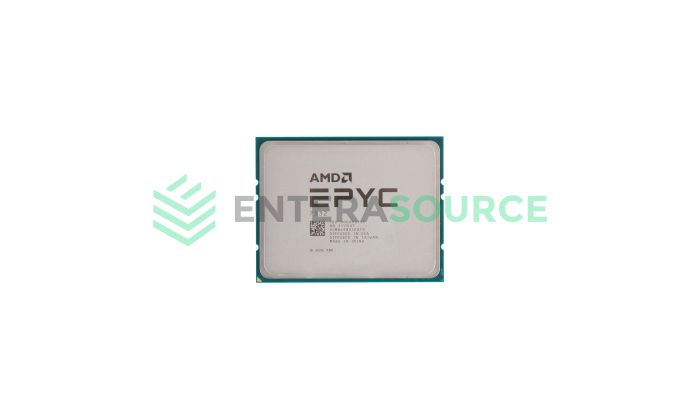

AMD EPYC 7532 32-Core / 64-Thread SP3 Processor (Dell-Locked): 256 MB of L3 on 32 Cores
Enterasource is proud to present the AMD EPYC 7532, a 32-core, 64-thread Rome-generation server processor on AMD's SP3 platform. One specification defines this part and explains why it exists alongside other 32-core EPYC 7002 processors: 256 MB of L3 cache.
Eight Megabytes of L3 Per Core — Double the Usual Ratio
Two hundred and fifty-six megabytes across 32 cores is 8 MB of L3 per core. The more common 32-core Rome part carries half that ratio. AMD builds the higher-cache SKUs by populating more core complex dies with fewer active cores each, so the cache-per-core figure goes up without the core count changing.
| Specification | EPYC 7532 |
|---|---|
| Cores / threads | 32 / 64 |
| Base clock | 2.4 GHz |
| Maximum boost | 3.3 GHz |
| L3 cache | 256 MB |
| TDP | 200 W |
| Platform / scalability | SP3, 1P and 2P |
| PCIe | 4.0, 128 lanes |
| Memory | DDR4, 8 channels, up to 3200 MT/s, 204.8 GB/s per socket |
Which Workloads Actually Pay for the Cache
AMD's own workload affinity for the high-cache Rome parts leads with analytics and computer-aided engineering — CFD and FEA. Those are workloads with working sets that fit in a large last-level cache but not in a small one, where the difference between a cache hit and a trip to DRAM dominates runtime.
For general virtualisation or web serving, the cache advantage is much smaller and a standard-cache part is the better value. This is a processor to choose deliberately rather than by core count.
PCIe 4.0 and Eight DDR4 Channels
Rome brought PCIe 4.0 to the SP3 socket — 128 lanes of it — along with DDR4 at up to 3200 MT/s across eight channels for 204.8 GB/s per socket. In a two-socket configuration that is 256 lanes and sixteen memory channels, which is why Rome-generation machines carry NVMe complements that earlier platforms needed switches to reach.
One compatibility note stated carefully: SP3 carried three EPYC generations, so socket compatibility does not imply firmware compatibility. A board has to support the Rome generation specifically. AMD's dataset says nothing about firmware levels, so we publish no rule about it — check your board vendor's processor support list.
SMT, Not Hyper-Threading
The 32-core / 64-thread pairing is AMD's simultaneous multithreading, SMT. The Intel trademark does not apply to an AMD part and is not used here.
The Dell-Locked Disclosure
This unit is Dell-locked. That is our own inventory disclosure, not an AMD specification — AMD publishes nothing about OEM processor fusing. A processor fused to one server vendor's platform is generally not usable in another vendor's board, and we would rather tell you that plainly than have you find out at commissioning. If your target platform is not Dell, ask before ordering.
AMD publishes both a tray and a boxed ordering part number for this processor; the unit we hold matches the tray OPN with our own vendor suffix appended.
Important Notice: the AMD EPYC 7532 is a server processor for the SP3 platform. This unit is vendor-locked as disclosed above. Heatsinks and carriers are not included. Every unit is tested before it ships and is covered by the Enterasource warranty shown on this page.